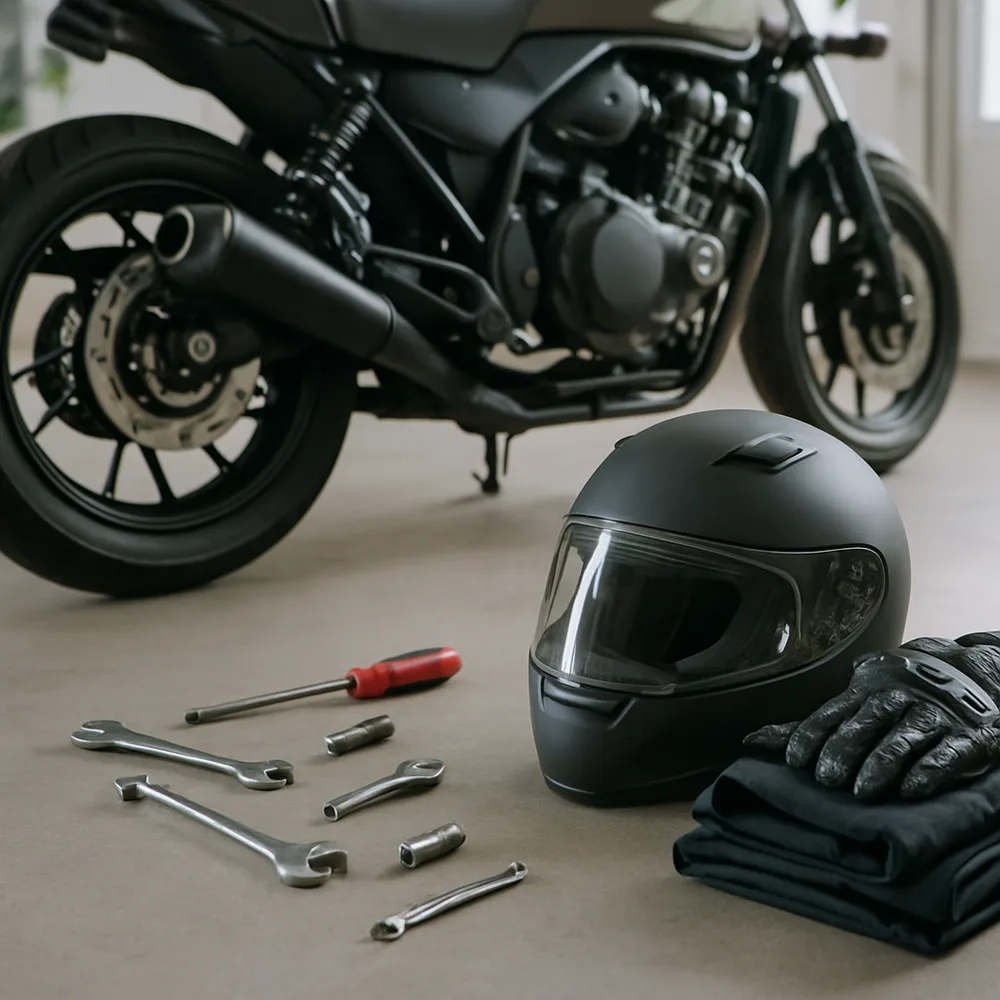
Before a test ride, confirm that you are legally permitted and properly equipped to ride the motorcycle. Check the seller’s requirements, insurance arrangements, and route conditions. Start by sitting on the bike with the engine off. Reach the bars and controls naturally, turn the steering from side to side, and see whether the motorcycle feels manageable when upright. Ask about unfamiliar controls before moving off, and do not ride if the bike appears unsafe.
On a suitable route, assess the motorcycle gently and progressively. Notice clutch take-up, throttle response, braking feel, and whether the bike tracks steadily. Try ordinary low-speed maneuvers only in a safe open area, and avoid testing limits on public roads. Observe your posture after several minutes: pressure on your wrists, cramped legs, or a helmet buffeted by wind may become more significant on longer rides. Be alert to vibration and heat, but remember that unfamiliarity can affect impressions.
Afterward, take a moment to write down what worked and what did not. Compare the bike with your actual needs rather than with an idealized image of ownership. Ask about maintenance intervals, operating instructions, and any warning lights or known issues. A brief ride cannot reveal every mechanical problem, so it does not replace an inspection or service history. If the motorcycle is a serious candidate, arrange a qualified check before committing, especially when you are new to evaluating used machines.